Showing posts with label Australia. Show all posts

Tuesday, 8 April 2014

Time for a National Asbestos Eradication Plan

In the summer of 2013 I wrote about Australia's attitude to asbestos. Specifically, I mentioned that on 3 June 2013 the Australian Federal Parliament passed legislation to implement the Asbestos Safety and Eradication bill. In accordance with this, the National Strategic Plan for Asbestos Awareness and Removal 2013 - 2018 (NSPAAR) was released by the Australian Government on 31 July 2013.

I mention this again now because I believe it is high time for Britain to adopt the Australian example.

The Australian blueprint


NSPAAR is the first scheme of its kind. It establishes a national approach to asbestos eradication, handling and awareness in Australia, the aim being to prevent exposure to asbestos fibres in order to eliminate asbestos-related disease once and for all. It is underpinned by annual operational elements which will be approved by the federal minister with responsibility for workplace relations.
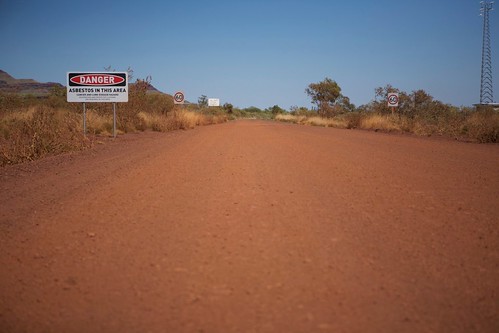
Danger Asbestos in this Area

All in all, NSPAAR marks an historic step, with Australia becoming the first nation to progress tangibly towards the complete elimination of asbestos-related disease. It is something of which Australians can rightly be proud - and surely it amounts to a blueprint that we in Britain could and should follow?

Report by UK Committee on Carcinogenicity


This seems all the more pressing given the findings of the UK Committee on Carcinogenicity, which published a report in June 2013. The report cited findings that children exposed to asbestos are more vulnerable to the development of mesothelioma than adults. Further, the lifetime risk of developing mesothelioma is predicted to be around 3.5 times greater for a child exposed to asbestos aged five compared to an adult first exposed at age 25, and five times greater for a child exposed aged five compared to an adult first exposed at age 30.

The Department for Education's own guidance states that more than three quarters of schools in England have at least some buildings that contain asbestos. There has been no survey into the condition of this asbestos, however, so the scale of the problem has never been specifically addressed.

This report motivated a group of MPs to table and support an EDM on 10 March 2013 which welcomed the Department for Education's policy review for the management of asbestos in schools. The EDM also cited the evidence given to the Education Select Committee by a leading epidemiologist that between 200 and 300 people could die each year from exposure to asbestos experienced as a child at school. The motion called on the government to look to Australia and its National Strategic Plan for asbestos as a blueprint to establish long-term strategic policies for the eradication of asbestos disease and to set systems, timelines and processes for the safe removal of asbestos materials from public and commercial buildings - with priority being given to schools.

APIL's endorsement


The need for a long-term approach most recently gained support from APIL in its excellent and thought provoking response to Department of Education's review. This was published last month and it's well worth repeating:

The seriousness of asbestos exposure appears to be under-appreciated, because the effects of such exposure do not develop until many years later. As such, the current government policies in place are piecemeal and largely involve asbestos remaining in situ with little regard for whether it would actually be safer (and indeed more economic in the long run) for it to be removed. There is often a lack of clarity as to which body is ultimately responsible for asbestos management in the school in question. It is even unclear, for example, which government is responsible for asbestos management for schools in Wales.

The short term outlook and lack of clarity over responsibility mean that the current policies are unsatisfactory, and will put children, and those who work in schools, at risk. There must be a movement from a reactive to a proactive approach. This must be a co-ordinated approach for the whole of the United Kingdom.

As an organisation that promotes safety against hazards, APIL supports the call for:

  • Clearer and greater central responsibility for tackling the problem of asbestos in schools;
  • Investment into locating asbestos, and into air sampling to gain necessary information about the scale of the problem. The location of asbestos should be registered and should be made available for those in school. Where appropriate, asbestos can be left in situ or encapsulated, but if necessary - where there is dilapidation, for example - the asbestos should be taken away safely before it is accidentally disturbed and there is a serious risk to health; 
  • Reintroduction of proactive inspections for schools; 
  • Mandatory training and raised awareness of asbestos for those who work in schools; 
  • A long-term plan for phased removal of asbestos needs to be carefully considered. Priority should be given to those schools where the asbestos is in the most dangerous or damaged condition. 

The DoE has an opportunity to lead the way to a better future


Let us hope this opportunity is not missed by the present UK government. The DoE can be the start of a significant, necessary and overdue strategy to protect the next generation and reduce risk, starting as it should in our schools and with our children.

Wednesday, 10 July 2013

It's time to adopt the Australian example for asbestos management

Last week I wrote about the opportunities the UK civil litigation landscape presented for Australian law firms. Today I'm again referencing the Antipodes. This time, though, rather than the focus being from Australia to Britain, it’s the other way round.

When it comes to asbestos, we could look to Australia and learn an awful lot.

The Aussies have got it right

Here, the government seems to have a blind spot with regard to asbestos, especially asbestos in schools. Time and again evidence is presented to make the case for the wholesale removal of asbestos in schools, and yet nothing happens. In Australia, a very different and laudable approach has been adopted.

On 3 June the Australian Federal Parliament passed legislation for the Asbestos Safety and Eradication Bill. As the estimable Asbestos in Schools website has it, "This is precisely the fundamental strategic thinking that is urgently required in Britain. It underlines the Australian Government’s commitment to solve their asbestos problem once and for all." Moreover, the Bill "sets a benchmark for our Government when they conduct the review of asbestos policy in schools."

In Australia, then, a national agency will be set up to investigate the problem of asbestos in schools. Far from thinking that asbestos in schools isn't a problem, in Australia the inherently fluid and dynamic environment in schools is accepted as being exactly the kind of place in which asbestos fibres can be easily disturbed – with potentially deadly results. The national agency will then go about developing and implementing a strategic plan to eliminate asbestos and asbestos-related diseases.

What needs to happen in Britain

Last Wednesday I attended a meeting convened by Asbestos in Schools at Portcullis House in Westminster. It was followed by the All Parliamentary Party Group Asbestos Annual Seminar, which was also held at Portcullis House. Regrettably I was unable to attend the second seminar, but as ever the speakers at the Asbestos in Schools meeting were articulate and persuasive. They included the tireless Michael Lees and NewLaw solicitor Cenric Clement-Evans, both of whose arguments I whole-heartily endorse. In summary, they are:

  1. Children are more vulnerable to exposure to asbestos than adults; the younger the child, the greater the risk. This is because children's lungs are immature and therefore more susceptible to injury. The government's own advisory Committee on Carcinogenicity (COC) published a statement to this effect on 7 June. It stated clearly that the younger the child, the greater the risk.
  2. The government's present review of policies regarding asbestos in schools is not impartial - and seems set to do nothing to change the status quo. The Health and Safety Executive, far from taking on board the profound dangers posed to children by asbestos in schools, underplays the threat. Its determination to have the review conducted internally is flawed, and likely to whitewash obvious problems.
  3. The bold and principled stance taken in Australia should be adopted here. We need an objective, external review of the problem - a formal 'asbestos audit', as it were. Transparency and openness are key but beyond that it is vital that the government wakes up and confronts the profound danger posed to children by asbestos. There is more on this at this link. 

Flaws in the Mesothelioma Bill

Meantime, our parlous attitude to the problem of asbestos is highlighted by the disturbing story of Lorraine Berry. Lorraine was diagnosed with mesothelioma, caused by inhaling asbestos dust, in April 2012, aged just 48. On top of having to come to terms with the fact that she will die prematurely, Lorraine has come up against a brick wall in trying to obtain proper redress for the fact that, while at work, she was not protected from asbestos fibres.

Lorraine's former employer has ceased trading. Although employer's liability insurance was compulsory from 1972, attempts to find any insurance cover have failed. It is anticipated that more than 300 mesothelioma sufferers a year miss out on justice because insurance documents for their employer have disappeared; to remedy this, we have the Mesothelioma Bill, announced in the Queen's Speech in April. This purports to solve the issue of a lack of insurance, enabling claims nevertheless to be brought.

There are, however, unaddressed issues. The Bill only applies to those diagnosed after 25 July 2012. This arbitrary cut off date means that Lorraine is not eligible because she was diagnosed three months out of time.

In my view the government should take a leaf out of the Australian book. Whether young, adult or elderly, it cannot be right that a civilised society continues to acquiesce in the harm caused by asbestos and to inhibit those affected from obtaining rightful compensation.

Friday, 5 July 2013

Shine's interest shines a light on a UK market that is ready to talk

I was intrigued by a recent piece in The Lawyer about Australian interest in the UK legal marketplace. You can read the piece here. It explains that newly listed firm Shine Lawyers is looking at moving into the UK market. If it does, it would follow in the footsteps of Slater & Gordon, another heavyweight, and listed, Australian firm.

Erin Brockovich (2000) Poster
Shine has an alliance with environmental
advocate Erin Brockovich
Shine is valued at A$155m, after joining the Australian Securities Exchange in May this year. The very well regarded firm - which has a 10-year alliance with high-profile environmental advocate Erin Brockovich (yes, she of the Julia Roberts film) - made clear its ambitions for the UK in its IPO, signalling that its aim to expand globally would meet its first targets on these shores.

Antipodean enthusiasm

The firm's managing director, Simon Morrison, told The Lawyer that Shine was looking at acquiring "damages-based plaintiff litigation firms" here. "We have been looking at the market for the past few years and has done due diligence on a number of firms. But at the moment we don't have a time frame for the entry and haven’t decided on a target yet," Morrison said.

At first blush, it's tempting to wonder if Antipodean enthusiasm for the UK legal market is sensible. Certainly, there must be those who might suggest that Morrison has got it wrong, given the massive changes to civil litigation that have occurred in the wake of the Legal Aid, Sentencing and Punishment of Offenders Act (which became law last April). Moreover, as I wrote earlier this week, legislative change is not confined to LASPO: the Enterprise and Regulatory Reform Act, which recently received royal assent, is also set to introduce seismic eruptions to our legal landscape.

But actually, Morrison is onto something - and not just because of commonalities between Australian and Britain's developed legal systems. These are a great help, so too is something we can all take for granted: English as a common language. But there's another reason for Morrison, and, presumably, well-placed competitor firms in Australia, to be eyeing up the UK.

The UK market is ripe and ready

Post-LASPO, our law firms are facing a considerable challenge. The Act was introduced with the aim of curtailing what were perceived to be out-of-control litigation costs, but whatever its intent the reality has not been properly thought through. Put simply, LASPO's many changes will make it harder and harder for law firms to run cases professionally and commercially. At one end of the scale, high street firms existence may be challenged; at the other, national firms will see plummeting net profit margins, at least in the short term. The extraordinary and ongoing erosion of legal costs seems to pay no regard to the fact that maintenance of professional standards comes at a price.

In the middle, there are a great many firms who conduct and rely on claimant personal injury work, who when it boils down to it face one of two choices, or some combination of the two: to become niche, or to consolidate. The former will have to become lean and efficient if they are to survive (the real risk is that some will not maintain high professional standards) . The latter may conclude that only merging will see them still in business by the end of the present decade.


Morrison and his colleagues at Shine are wise to look to the UK. UK litigation firms, save for the already niche or the already huge, will be in the mood to talk.

Monday, 19 November 2012

Government must shed light on the darkness shrouding child abuse with wide ranging enquiry


A Prime Minister recently announced a wide-ranging inquiry into child sex abuse saying "Any instance of child abuse is vile and evil thing. There have been too many adults who have averted their eyes to this evil. There has been a systematic failure to respond to it and to protect children".

For UK citizens who have listened daily in recent weeks to the deeply depressing revelations about Jimmy Saville, the Bryn Estyn children's home and others in North Wales and last week's news that a former Church of England Bishop and a priest have been arrested on suspicion of sex abuse in the late 1980s and early 1990s, you might think that the quote above is from David Cameron.

In fact it was made by the Australian Prime Minister, Julia Gillard, as she recently announced a Royal Commission into child sex abuse, the institutional responses to abuse, the potential complicity of those institutions and the response of the police. Similar state level inquiries are already under way in Victoria and New South Wales.

The precise remit of the commission is still to be determined but it is believed that it will cover a broad range of institutions from the Catholic and other Churches, boys scouts and sports groups and child welfare agencies. The founder of one child protection charity in Australia, Hetty Johnston of Bravehearts, has said that the Commission should be as broad as possible: "The royal commission needs to include not only the churches. It needs to include family and other courts, government organisations and other institutions, anybody who has a duty of care".

Having recently been in Australia attending and speaking at the Australian Lawyers National Conference, it is horrifying to see the similarities with recent events in the UK being played out on the other side of the globe.

In both countries, an unknown, but large, number of victims have been ignored or dismissed for decades. They have been forced to suffer in silence with their anger, hurt and fears. Meanwhile it is increasingly apparent that institutions and authorities, that children should have been able to rely upon and place their trust, have engaged in the systematic cover-up of the truth with a "look the other way" attitude towards cases of abuse and perhaps have even aided abusers.  That some of the victims of child abuse are to finally be given a voice to tell the truth will be greeted with mixed emotions by those that really matter - the victims themselves.

There is currently an internal BBC inquiry and the public inquiry into abuse claims in North Wales' children's homes is to be reopened.  But the UK Government should follow the lead of Australia and instigate a wide-ranging inquiry, rather than these narrowly focused investigations.

There will undoubtedly be those who will argue that inquiries are expensive, are frequently knee-jerk reactions to events and take too long (the child abuse inquiry in Ireland began in 2000 and only reported its findings in 2009).

But they are also an essential component of a democratic society when it is either proven or suspected that the normal institutions of government have failed to protect the innocent or seek justice for the victim. If the institutions of justice have failed to do their duty and protect society, it is sometimes necessary to by-pass those very institutions and implement an independent review of the evidence and historical and current events.

I sincerely regret that child abuse is unlikely ever to be eradicated, but we as a society must do all we can to prevent abuse in the first place and seek justice when it does occur. Society must be unafraid to look into its darker corners in the pursuit of truth.

Thursday, 15 November 2012

Back from the Antipodes


Here's a quick update to say that I'm back from Australia – somewhat jet-lagged, it has to be said. I still feel as if I'm upside down. I can’t help but marvel at people who fly to the other side of the world for business trips of just a day or so, then return to the UK. Maybe their body clocks adjust by dint of being constantly on the move, but I'm still getting used to UK time.

I was in Australia for the national conference of the Australian Lawyers Alliance. This took place in a suburb of Adelaide called Glenelg. As I predicted, the weather was rather warmer than it is here.

I'm keeping this blog brief owing to the pile of work to which I've returned. At the conference – which I found hugely interesting and informative – I spoke about PI and litigation reform in the UK. However, the key thing that struck me about life in Australia, and the legal issues the country's lawyers have to deal with, boils down to one thing: immigration.

I recall reading that one in four of Australia's 21 million people were born overseas; to spend just a short time in the country is to see that it is a multicultural melting pot. However, Australia’s immigration policy is a topic of great controversy. The government exercises considerable control over who is allowed to enter the country through the visa system. Anyone who is not an Australian citizen must hold a valid visa to be lawfully in Australia.

This is reasonable enough, but ‘unlawful non-citizens' (as they are known) must be detained under the Migration Act until they are able to establish their Australian citizenship, or have evidence of being a lawful non-citizen (for example, they have a valid visa), or are granted a visa.

In speaking to Australian lawyers I discovered that there is considerable disquiet about the way in which people are detained, pursuant to one of the strictest immigration regimes in the world. One of the foremost firms with expertise in this area is Shine, whose offices span the country.

I met with various personnel from Shine, including two very interesting characters – former Lt Colonel Michael Mori, who represented Guantanamo Bay detainee David Hicks, and George Newhouse, an Australian Labor Party candidate in the 2007 election who now heads up Shine's social justice practice. Mori became a military judge in Hawaii but is now working for Shine in Melbourne, and, as with Newhouse, he has an excellent record in human rights cases.

In talking with Shine's lawyers I discovered that anyone who is reasonably believed to be an unlawful non-citizen must be detained by an Immigration Officer. Even worse, the detention can be indefinite and detainees have limited rights to challenge the need for and the conditions of their detention in a court. Worryingly, it seems that detention is the norm for those without a valid visa, rather than something exceptional. This cannot but raise serious concerns from a human rights perspective.

This is a bird's eye view of a serious problem, but it has parallels with the points I have regularly made about reform of the PI sector in the UK. What is required in Britain, as the changes recommended by the Jackson review come yet closer to implementation, clearly applies to Australia, too – namely a holistic assessment of the overall system which is flexible enough to take into account the nuances of individual cases. The aim must, at all times, be to put a premium on justice being seen to be done – and actually being done.

My visit to Australia revealed a wonderful country with a huge amount going for it, but, when it comes to its immigration policy and practice, there is undoubtedly work to be done.